Romania's Economic Crisis, Explained: Ambassador Zuckerman and Analyst Andrei Caramitru on What Happens Next
In a wide-ranging interview on DC News TV, two of Romania's most outspoken observers laid out what a PSD-AUR government could mean for the country's finances — and the prognosis is stark.
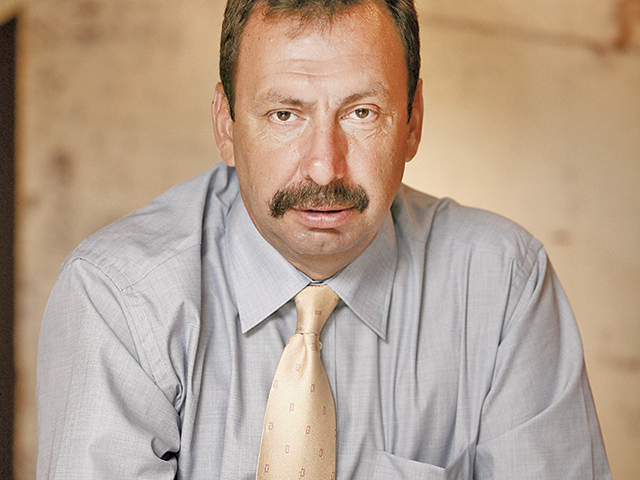
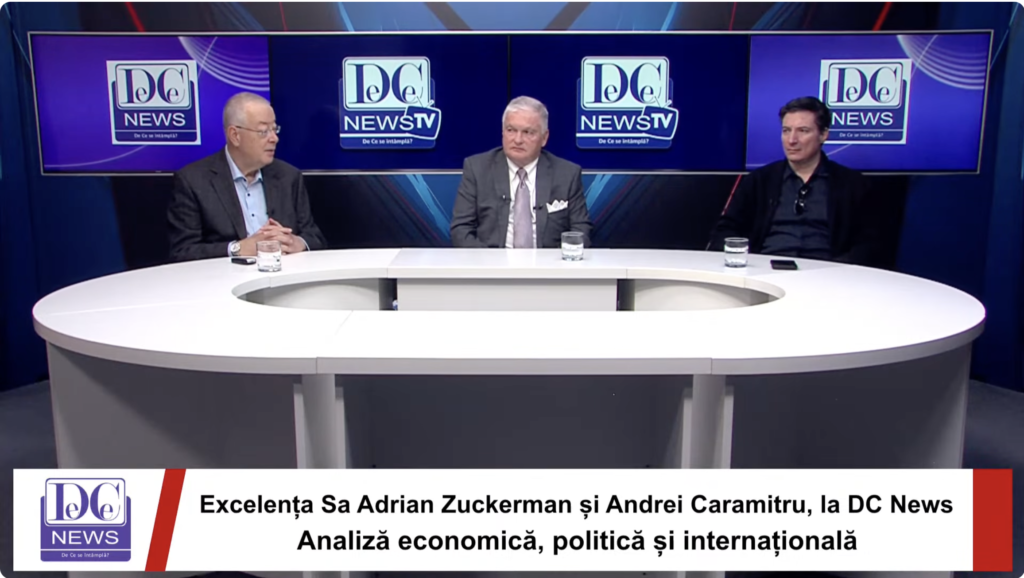
On April 29, 2026, Alianța Chair Ambassador (Ret.) Adrian Zuckerman joined Romanian economic analyst Andrei Caramitru for an emergency broadcast on DC News TV, hosted by journalist Bogdan Chirieac. The occasion: the announced joint censure motion by PSD and AUR against Prime Minister Ilie Bolojan's government.
What followed was one of the most direct public assessments of Romania's economic position in recent memory. You can watch the full interview here: Watch on YouTube →
The Trigger: A Censure Motion That Could Unravel Romania's Finances
The interview opened with a straightforward question: what does a PSD-AUR government actually mean for Romania's economy?
Caramitru didn't hesitate. Romania, he explained, is operating under what he called an "IMF-light" agreement — a multi-year financing arrangement with the EU and international creditors that requires Romania to implement specific fiscal reforms: listing state-owned companies, reducing structural deficits, and cutting waste. The Bolojan government was the vehicle for implementing that agreement.
A PSD-AUR majority, Caramitru argued, exists for precisely one reason: to avoid those reforms.
"Any rational financier will immediately sell the leu, sell government bonds, and put in no more money. We have about three weeks of real reserves at the BNR to hold the leu at some level."
His projection: without the financing agreement intact, Romania faces a currency crisis within weeks — with the leu potentially falling to 7 to the euro — followed by the kind of sovereign default and forced restructuring that Greece experienced after 2010.
The Greece Parallel
Caramitru spent several years working on Greece's restructuring at McKinsey and drew the comparison explicitly.
Greece, he noted, was given generous terms by the EU and IMF — a multi-year gradual adjustment rather than an immediate shock. It worked, slowly. Then Syriza came to power, constitutionally banned further negotiations with the EU, and within three weeks there was no cash in ATMs.
"They had resolved things in three years. But because of this stupidity with Syriza — which lasted 15 years for the country — wages in Greece now are lower than they were 15 years ago. The price of homes is lower than 15 years ago."
His warning: Romania is structurally different from Greece in important ways — Romania actually produces things, has a more complex economy — but the political playbook is identical. And the consequences could be the same.
Ambassador Zuckerman on AUR and Foreign Influence
Ambassador Zuckerman, who served as U.S. Ambassador to Romania from 2019 to 2021, was direct about his assessment of AUR.
"It's a party dangerous to Romania, dangerous to democracy, dangerous to the West — a party that shouldn't exist in Romania. It contains xenophobes, antisemites, people who don't stand for Romania but for foreign interests: the Russians, the Chinese, others."
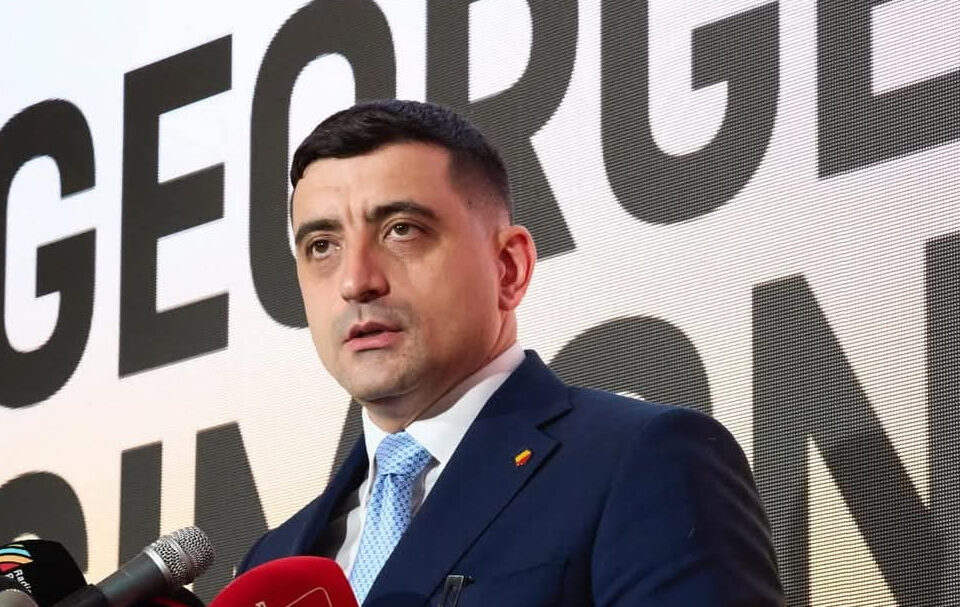
On Simion specifically, he noted that the AUR leader has been shut out of the Heritage Foundation, CPAC, and the broader network of American conservative institutions he once sought to cultivate.
"He has zero support in the U.S. He tried to infiltrate many things. People initially saw him as a conservative. Now they understand his ties to Russia and others — and he's been removed."
Both guests pointed to AUR's vote against allowing the use of Romanian military bases as evidence of where the party's real allegiances lie.
The Structural Problem: A Revolution That Never Finished
A recurring theme across the interview was the continuity of Romania's communist-era institutional failures — a point Ambassador Zuckerman has made consistently since his time in Bucharest.
"I've always said the Revolution is not over. Not that there are still communists — but the systems created under communism still exist. The black holes in state companies, the corruption that Bolojan is trying to dismantle, and many people don't like it."
Caramitru put numbers to it. He identified three primary structural drains:
- 69 billion lei per year flowing from the central budget to small counties that produce almost no tax revenue of their own — the equivalent of 14 billion euros annually in transfers with little accountability.
- 50 billion lei in annual VAT gap — the difference between what Romania should collect compared to Bulgaria and what it actually collects. Caramitru pointed directly to Constanța Port as a key node: a platform for off-the-books imports shielded by ANAF, judges, and well-connected operators.
- 20–30 billion lei in combined losses and subsidies from 1,400 state-owned companies — enterprises staffed with political appointees, relatives, and party loyalists rather than competent managers.
"The system cannot continue functioning like this. It's impossible. We're like a locust swarm — nothing is left."
Who's Voting for AUR — And Why
One of the interview's more nuanced moments came when Caramitru pushed back on the assumption that AUR's electorate is uniformly anti-Western.
Polling, he argued, suggests roughly 15% of Romania's population holds genuinely anti-Western, pro-Putin views. AUR's support runs to around 40%. That means, in his estimate, two-thirds of AUR voters are actually pro-Western — they are simply furious with the existing system.
"They were all the same at the village level, and suddenly the mayor who used to have three chickens arrives by helicopter and gives his daughter a 300,000 euro Mercedes. People see that."
The implication: AUR's voters are not the core problem. The theft and incompetence that radicalized them is the problem.
What Needs to Happen
Both guests converged on the same prescription, even if expressed differently.
Zuckerman called for a true free market — genuine private investment, the state stepping back from its role as a business partner, and a government that collects only the taxes needed to run essential services. He pointed to the IT sector's development under a favorable tax regime as evidence that the model works, and lamented its partial reversal.
Caramitru offered a more immediate political prescription for President Nicușor Dan: convene all parties, lay out the real fiscal situation, and force a negotiation over which five of ten necessary reforms can be agreed on — even imperfectly — to prevent the country from losing another 15 years.
"Romania is one of the richest countries in Europe by resources. The free market must be unleashed. The bucket must be filled."
Watch the Full Interview
This conversation covers significantly more ground than any summary can capture — including specific exchanges on Transelectrica, the Doicești SMR project, Rheinmetall's partnership structure, ANAF digitization, and the role of the U.S. Embassy.
Watch the full DC News TV interview with Ambassador Zuckerman and Andrei Caramitru →
Alianța is a nonpartisan organization dedicated to strengthening the U.S.-Romania strategic partnership. The views expressed by guests in external interviews are their own.