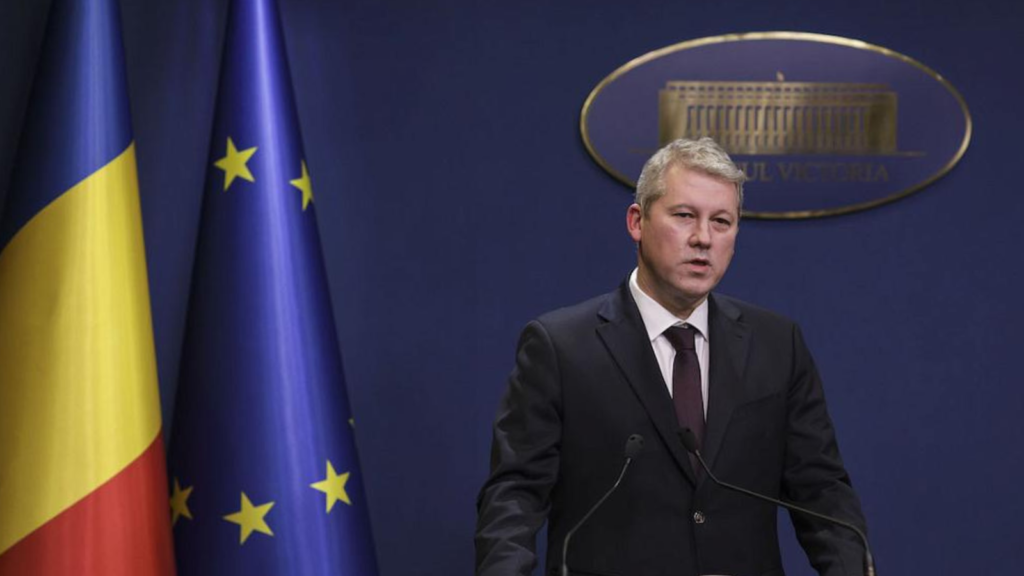
Romania's Interior Minister and former Justice Minister Cătălin Predoiu published a new essay today on Romania's economic model, arguing that the country's post-2016 growth formula, external borrowing, EU funds, and consumption, has run its course just as the PNRR expires this August. Writing on his personal blog, Predoiu — who received Alianta's 2025 International Public Service Award — calls for a decade-long, cross-party consensus on a national economic model comparable to the one that carried Romania into NATO and the EU.
Read the translation below, and the original post at the link.
In Search of a National Economic Model (2)
By Cătălin Predoiu | July 12, 2026
Originally published at predoiupolitica.ro
Ten years ago, Romania's external debt stood at roughly 20% of GDP, a relatively low level. During that period a development model took shape, built on three pillars: external borrowing, EU funds, and consumption.
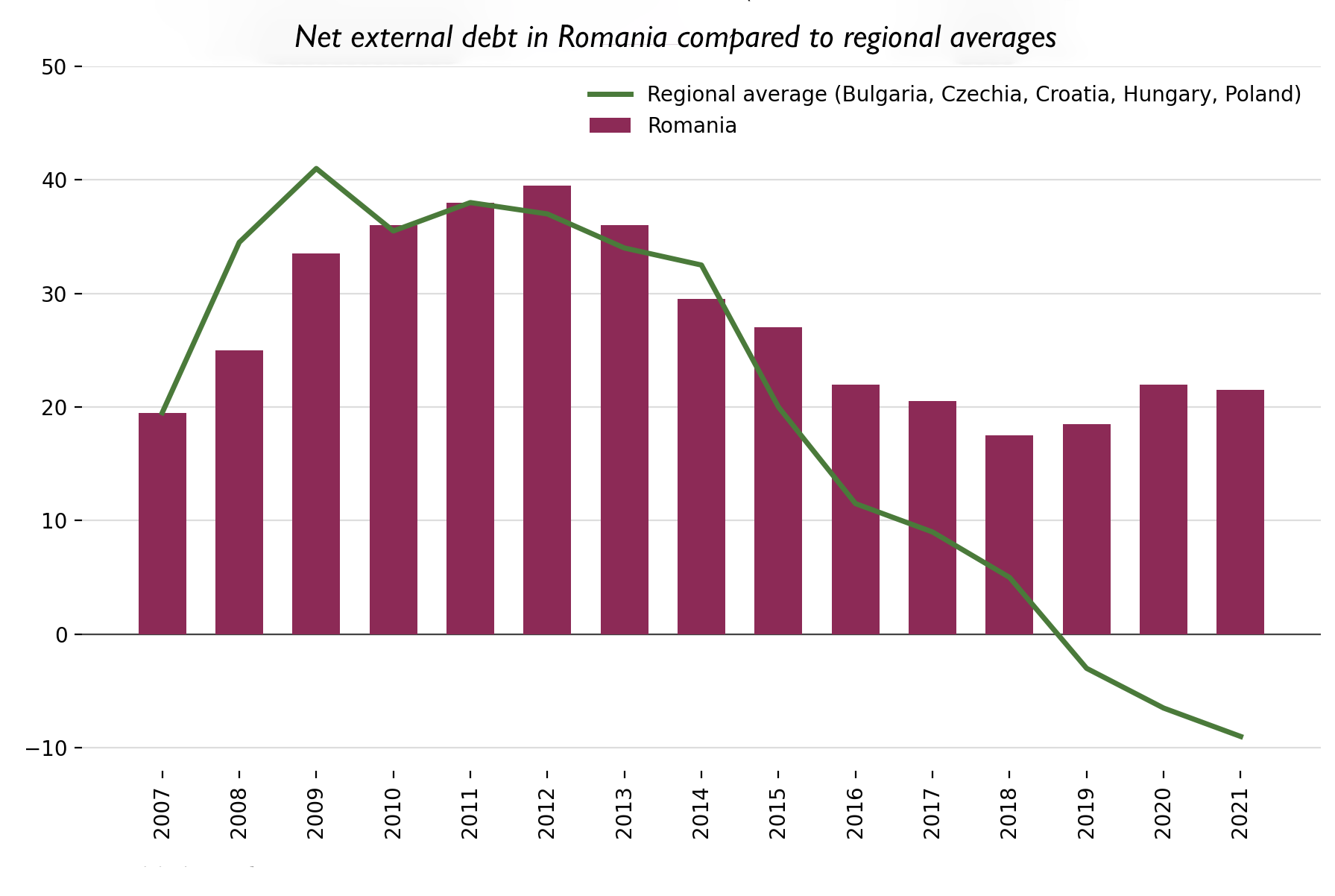
The first pillar, external borrowing, financed mainly increases in public wages and social assistance, along with infrastructure investments with mostly local or regional impact. Through the "Anghel Saligny" Program, significant resources went to local authorities for modernizing county and communal roads and building bridges, schools, administrative buildings, and other facilities communities needed. These investments answered real needs, but a substantial share of the resources should have gone toward sectors with high multiplier effects on the economy: future industries, digitalization, critical minerals development, research, and advanced technology.
The second pillar, EU funds, was hampered by weak administrative capacity, bureaucracy, and in some cases corruption. On top of that, access to funds under the National Recovery and Resilience Plan (PNRR) was tied to structural reforms the Romanian administration still hasn't managed to complete. Public sector pay reform is just one example. As a result, Romania lost billions of euros in EU funds last year, and several billion more remain at risk, since the committed reforms weren't fully carried out and the government lacks the constitutional tools to quickly pass the outstanding legislation. What's more, the PNRR ends in August 2026, meaning this exceptional funding source will no longer be available.
The third pillar, consumption, was largely fueled by imports. The trade deficit widened because domestic supply couldn't keep pace with demand, mainly due to overregulation and bureaucratic barriers that continue to discourage investment and private sector growth.
Today, Romania has no coherent, viable economic development model, not even at the conceptual level.
There's constant talk about reform and economic development, but any deep transformation of central and local administration has to start with a professional administrative audit. That audit should compare the legislative framework against the institutional structures built to enforce it. How many of the regulations ministries apply or issue are still mutually consistent? How many are still needed? How many overlap, contradict each other, or in practice obstruct the economy? Equally, it needs to assess whether current organizational structures and administrative functions still match the responsibilities set out in existing law.
Deregulation has to happen simultaneously with, and tightly coordinated to, the reorganization of central and local administration. Only that way can cost reductions be achieved rationally, without damaging institutional capacity. Such a preliminary assessment could take one or two years, with actual implementation of the adjustments taking several more.
At the same time, Romania needs to redefine its national economic model, starting from its own resources, its demographic realities, the professional structure of its active population, and the strategic objectives set through the political representation of national sovereignty. That model has to be built around Romania's competitive advantages and adapted to both the needs and the potential of the private economy.
The PNRR ends in August, the obsession of recent years. What comes next? What economic model will we follow? What will there even be left to say about economic development? Consumption has exhausted its capacity to serve as the main growth engine. We're at the limit of over-indebtedness. We can keep borrowing, but at ever-higher cost. For what, though? How do we restart the economy if we don't even have a coherent model to follow?
Confining ourselves to budget deficit reduction and cost control is a necessary policy, but not a sufficient one for development, and in any case it cannot itself constitute an economic model.
A lower budget deficit doesn't automatically mean the economy takes off. Plenty of countries run low deficits with weak growth. But lower interest rates, lower inflation, and wages moving in line with productivity lay the groundwork for restoring competitiveness, and stimulating supply also requires a growth model. The problem has always been the deficit's weight relative to GDP, not the deficit alone, which means action is still needed on both ends: cost cuts and economic stimulus measures.
Reducing the budget deficit has been a priority and a necessity, and everyone understands that. But in parallel, a genuinely ambitious program for attracting foreign investment needs to be built, especially from strategic partner countries and the Gulf region, where a lot of liquidity is looking for a home. The regulations the government pushed through recently, some two to three months ago, before being brought down by the no-confidence motion, could be a start, but they need to continue alongside government-level political dialogue and targeted policies to attract major strategic investment in the sectors we choose as national economic priorities. For that, though, a development model is needed, our own national model, serving our economic interests rather than someone else's, and sustained across multiple governing cycles. So the essential question remains: after the deficit comes down, what then? Do we stick to fiscal consolidation, or do we finally build an economic model capable of restarting the economy and generating sustainable growth?
I believe this is the real challenge Romania has to solve, at the same time as finding the parliamentary majority needed to invest and sustain a government, or right after one is installed. Without a rapid economic recovery that pulls the country out of stagnation and back onto a growth path, those 233 votes will inevitably turn against whoever secured them.
Building and consistently applying a national economic model over at least 5 to 10 years requires broad, near-universal political consensus, similar to what was reached for Romania's NATO and EU accession.
I believe it's time to move past the simple status of NATO and EU member and strategic partner to a few important countries. It's time to consider standing more on our own two feet and to set our sights on being a regional economic power, not just cutting deficits and avoiding a sovereign downgrade. That's a necessity of the moment, but taken on its own it's a modest ambition, one for a country with no real aspirations. To have real ambitions, though, we need our own economic model, conceived first for our national economic interest and for the well-being of every family, every citizen. However idealistic that sounds, it's the only realistic policy that will also bring votes over the long run.