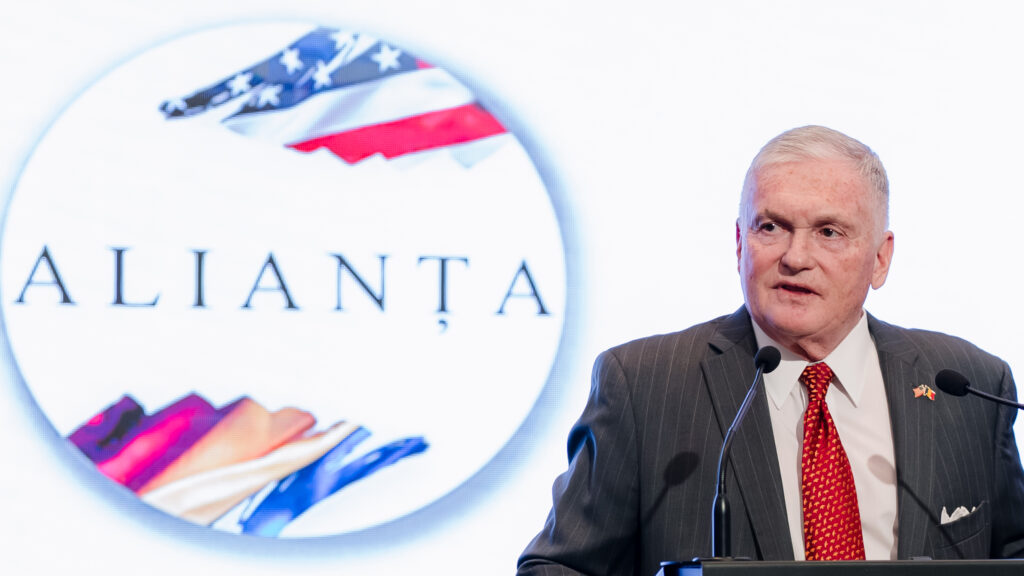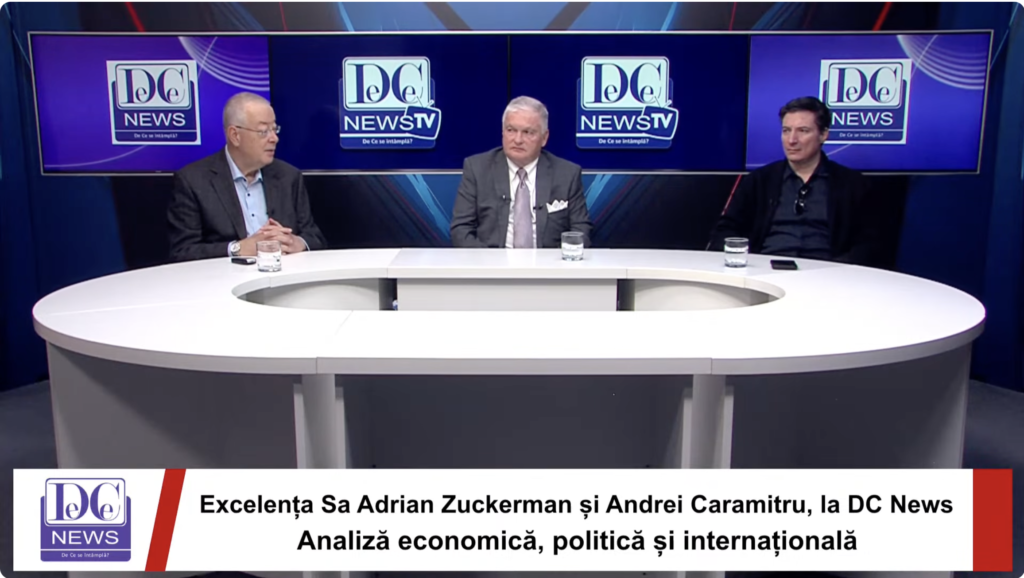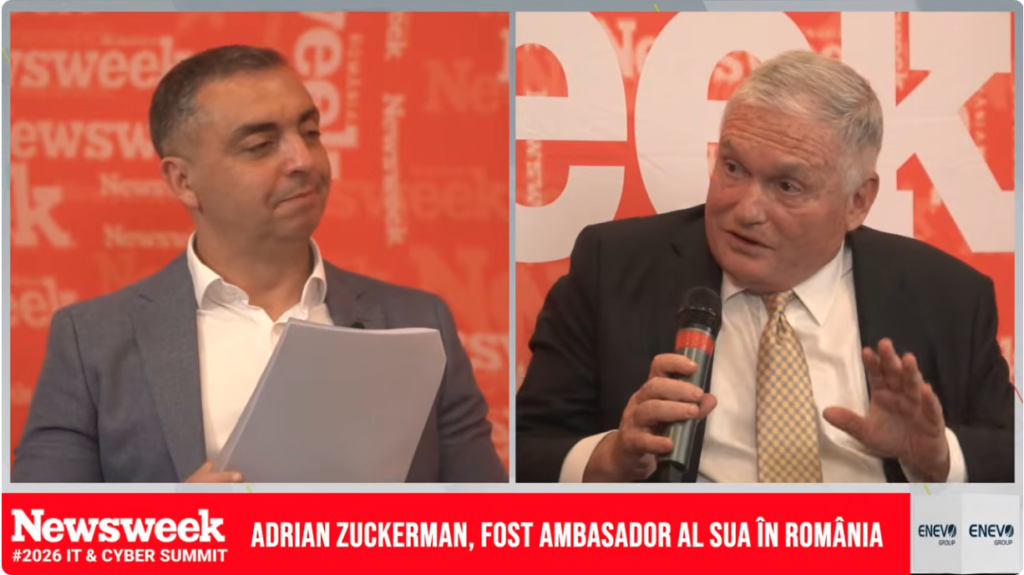
Ambassador Adrian Zuckerman, Chairman of Alianța and former U.S. Ambassador to Romania, joined Newsweek România's IT & Cyber Summit 2026 on May 25 for a frank conversation about the state-level cyber threats facing Romania — and why defending alone is a losing strategy.
Click here to watch the full video: https://www.youtube.com/live/AUvkKDtMhVM?si=WyjkWIiWdR6MO03w
The framing at most cybersecurity conferences is technical: patch your systems, train your employees, build better firewalls. Ambassador Zuckerman came with a different argument. Romania's cyber problem isn't primarily a technology problem. It's a recognition problem.
"We need to acknowledge that we are in a war," Zuckerman said during the summit's second panel. "Everything we've discussed today comes from two kinds of actors. One is the individual criminal — like the old bank robber who wakes up needing money. That one you can manage. But state actors are a different category entirely."
Those state actors, in Zuckerman's view, are Russia, China, Iran, and North Korea — what he called the "axis of evil" — each fielding hundreds, sometimes thousands of operatives whose sole function is cyberattack and influence operations. Romania, he argued, cannot fight that alone. No European country can.
The Equipment Problem Nobody Wants to Name
Zuckerman was direct about a vulnerability hiding in plain sight: Chinese-manufactured hardware.
Every Chinese product with Wi-Fi connectivity — from surveillance cameras to industrial solar panel controllers — functions, in his assessment, as a potential intelligence-gathering tool. The data goes to Beijing. He singled out Hikvision, the Chinese surveillance company with well-documented ties to the Chinese state, whose cameras are installed at the Romanian Presidency and across military installations.
"Who needs to be fired for this?" he asked. "Why are you telling them who comes and goes?"
The point extends beyond Romania. Huawei equipment, Chinese-made industrial controls, connected devices of all kinds — Zuckerman argued that the price advantage is deliberate. These companies are state-subsidized because market share matters less to Beijing than intelligence access. "They'd give it to you for free if they had to."
The Spain blackout — which left parts of the country without power for days — came up as a cautionary parallel. Zuckerman said he had received private information about its cause that hadn't been made public, though he declined to elaborate. His point was structural: when critical infrastructure runs on imported technology with connections to adversarial states, the attack surface is enormous. Power grids, water systems, rail networks — all potential vectors.
Defense Without Offense Is a Losing Game
The deepest part of Zuckerman's argument was strategic. Romania and its NATO allies have been operating in a defensive crouch — absorbing attacks, issuing warnings, publishing reports. That posture, he said, guarantees eventual failure.
"It's like a football match where you can only shoot at your own goal. Maybe you lose today, maybe tomorrow, but you will lose."
His prescription: NATO needs to invoke Article 4 consultations and build a comprehensive, coalition-level cyber strategy that includes offensive capacity. Not just shared threat intelligence — a coordinated response capability. Romania's DNSC Director Dan Câmpean, who was also on the panel, has been working toward a regional cyber hub in Bucharest. Zuckerman praised that effort, but said it isn't sufficient without broader NATO commitment.
The core problem is political, not technical. Western governments have been reluctant to formally name what is happening as warfare. That reluctance, Zuckerman argued, allows adversaries to operate in a grey zone that favors the attacker.
Information War as the Other Front
Beyond infrastructure, Zuckerman returned to the manipulation of democratic processes — something Alianța has consistently flagged. TikTok's server connections to Beijing make it, in his view, an instrument of Chinese state influence regardless of who nominally owns it in the U.S. He was skeptical that the recent American ownership negotiations meaningfully changed TikTok's intelligence relationship with Beijing, and noted that whatever terms apply in the U.S. almost certainly don't extend to the platform's operations in Europe.
Romania's annulled 2019 presidential election and Moldova's election interference were cited as documented cases of coordinated social media manipulation — not organic political movements, but engineered influence campaigns. "They say they're trying to follow the rules. In my opinion, that's a lie."
What Romania — and Its Allies — Need to Do
Zuckerman's recommendations, distilled:
- Formally recognize the cyber threat as warfare, not a law enforcement or technical matter
- Remove Chinese hardware from sensitive government and military installations immediately
- Stop purchasing Chinese-connected technology at the national procurement level
- Convene NATO allies for a comprehensive cyber defense-and-offense strategy under Article 4
- Support institutions like DNSC that are doing serious work, but need coalition-level backing to be effective
The summit also included contributions from Dan Câmpean (DNSC), Marius Bostan (entrepreneur and founder of RePatriot), Alexandru Suditu (SentryOT / ENEVO Group), Alexandru Iordache (1SEO Group), and Octavian Alexiu (ANCOM) — covering AI-enabled fraud, spoofing attacks, energy infrastructure vulnerabilities, and the organizational challenge of treating cybersecurity as a foundational investment rather than an afterthought.